
Category: Manufacturer Questions

  • Why Chevrolet Says You Should Not Use Salvage or Recycled Parts in Collision Repair and How This Affects You

    Why Chevrolet Says You Should Not Use Salvage or Recycled Parts in Collision Repair and How This Affects You

    GM wants your Chevy to have the most reliable replacement parts.

    Nearly every car manufacturer releases “Position Statements” that instruct body shops in how to perform repairs on their vehicles to the highest standard.  While all body shops should have access to this vital information, not all shops take the time to read the statements and follow the directions expressed by the manufacturers.  At our shop, we closely examine these statements because we make it our mission to provide the best possible repair to our Chevrolet customers.

    In a statement released by GM, they explain in detail why they do not recommend the use of salvage or recycled parts in Chevy repairs:

    “General Motors does not support the use of salvage or recycled parts due to the sensitive nature of the safety and performance of General Motors vehicles. Salvage or recycled parts are defined as parts removed from a previously damaged vehicle and then re-installed on a different vehicle.”
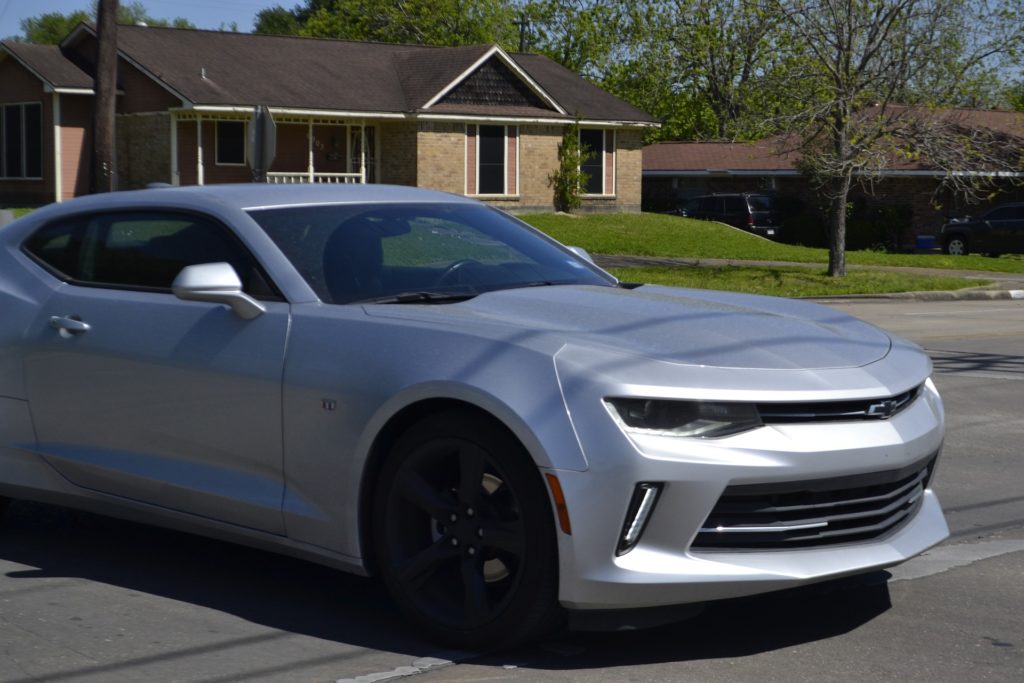
    Image of Chevrolet

    Salvage and recycled parts come with a lot of risk.

    Salvage and recycled parts can often have a questionable history.  They might have been involved in a previous collision or damaged during normal wear and tear.  They might have been in storage for a while or exposed to extreme temperature variations.  Because of these factors and the questionable conditions that the parts might have been exposed to, it’s nearly impossible to predict their durability and structural integrity.  Even the most minute disparities can lead to problems during assembly, as well as issues with the reliability of your repair.

    GM specify the following in their Position Statement:

    “The use of non-OEM structural components may compromise the overall crashworthiness and occupant safety of General Motors vehicles in a subsequent collision.”

    They are saying that, above all, salvage and recycled parts can pose a risk to your safety due to their unpredictable nature.


    Why new OEM parts are the best:

    It’s extremely important to use the best replacement parts for your Chevy when repairs are needed, and the best parts are always new Original Equipment Manufacturer (OEM) parts.

    According to GM:

    “Genuine GM Parts are designed and constructed using metals with specific properties, thicknesses and stamping features built to perform in a consistent and predictable way during a collision event.  GM recommends the use of Genuine GM Parts in repairs to help ensure the vehicle is returned to pre-collision condition.”

    The engineers at GM have rigorously designed, tested, and manufactured the parts for their specific vehicles.  They only trust the parts they have produced to meet the qualifications necessary for your specific make, model, and vehicle year.  You’ll need new OEM parts if you want your vehicle to be as good as new after your collision repair. 


    We take these guidelines seriously at our shop.

    We take all manufacturers’ Position Statements very seriously at our shop, because we care about your safety AND your wallet.  Despite the recommendation to use new OEM parts in repairs, some shops will continue to use salvage and recycled parts, even though this choice can jeopardize your vehicle and your safety.  It might shock you to learn that body shops are not forced to abide by the manufacturers’ guidelines.  

    When you take your Chevrolet to us for repairs, we will use only new Chevrolet OEM replacement parts so that you don’t risk future problems with your car that could potentially lead to an accident.  There is no guarantee that every shop will make the smartest and safest choice for your car, but rest assured, we always will.


  • Why GM Discourages Reconditioned Wheels and Why That’s Crucial for Your Buick

    Why GM Discourages Reconditioned Wheels and Why That’s Crucial for Your Buick

    GM doesn’t want you to jeopardize your safety with reconditioned wheels.

    Nearly every car manufacturer releases Position Statements explaining what methods of auto body repair they do or do not recommend.  While some shops disregard these statements, we take a fine-tooth comb to the information they provide so that we can provide the best possible repair for every vehicle that comes through our doors.

    In the case of wheel reconditioning, GM has issued a Position Statement clearly discouraging this practice in any Buick repairs.  If you are not familiar with wheel reconditioning, it is a process of using various tools and methods to try to repair a damaged wheel, instead of replacing it entirely.  Some methods include welding, reforming, or reshaping the wheel.  

    Here’s what they say:

    “GM does not endorse any repairs that involve welding, bending, straightening or re-machining. Only cosmetic refinishing of the wheel’s coatings, using recommended procedures, is allowed.  In evaluating damage, it is the GM Dealer’s responsibility to inspect the wheel for corrosion, scrapes, gouges, etc. The Dealer must insure that such damage is not deeper than what can be sanded or polished off. The wheel must be inspected for cracks. If cracks are found, discard the wheel. Any wheels with bent rim flanges must not be repaired or refinished.”

    The problem with reconditioning methods, such as heating, welding, and reshaping, is that these techniques could compromise the structural integrity of your wheels.  If a wheel is damaged enough to warrant reconditioning, then it should just be replaced outright.       

    Being the only parts of the car to actually make contact with the road, your wheels are essential to your safety and are worth investing the proper time and energy into.  It is simply not worth the risk to your life to take chances with the condition of your vehicle’s wheels.


    Image of Buick


    Why does GM approve of wheel refinishing?

    While wheel reconditioning is not approved of by GM, certain cosmetic repairs are fine.  It’s important that the wheels are carefully inspected first for any cracks, gouges, or bending. 

    GM says:

    “A refinisher’s responsibility includes inspecting for cracks using the Zyglo system or the equivalent. Any cracked wheels must not be refinished. No welding, hammering or reforming of any kind is allowed. The wheel ID must be recorded and follow the wheel throughout the process in order to assure that the same wheel is returned. Material removal, though, must be kept to a minimum. Re-machining of the wheel is not allowed. Paint and/or clear coat must not be present on the following surfaces: the nut chambers, the wheel mounting surfaces and the wheel pilot hole. The refinisher must permanently ID stamp the wheel and warrant the painted/clear-coated surfaces for a minimum of one year or the remainder of the new vehicle warranty, whichever is longer.”

    As you can see, GM provides very clear instructions for the procedures we must follow while inspecting and refinishing your Buick’s wheels.  If the damage is something that can easily be sanded or painted, then refinishing is acceptable.  If the damage is more than superficial, then the wheels must be replaced.  

    Superficial cosmetic adjustments are allowed, since they won’t jeopardize the integrity of the wheel structure.  Minor sanding and polishing repairs do not involve the use of heat or reshaping that reconditioning would entail.  


    Image of Buick

    Not all shops follow these recommendations, but we do.

    It’s disappointing, but some shops throw caution out the window and continue to practice wheel reconditioning, despite GM’s adamant recommendation to avoid this practice at all costs.  They can get away with this because no body shop is actually forced to adhere to a manufacturer’s Position Statement.  

    At our shop, we strongly believe that there’s no reason to take a chance with your Buick’s repair by going against the advice of the manufacturer.  Reconditioned wheels can lead to very dangerous problems down the road.  We will always replace your Buick’s wheels entirely if they’ve sustained significant damage or we will follow proper refinishing methods if the damage is cosmetic. 

    You won’t have to worry about driving on unstable wheels when you bring your vehicle to us.  We always follow the manufacturer’s recommendations in order to deliver the safest possible repair to our customers. 

  • GM Says It’s Dangerous to Use Salvage Structural Parts on Your Chevrolet—Here’s Why You Should Care

    GM Says It’s Dangerous to Use Salvage Structural Parts on Your Chevrolet—Here’s Why You Should Care

    Preserve the structural integrity of your Chevy by using only the best replacement parts.

    When you take your Chevy to a body shop for collision repair, of course you’re going to want the job to be done as safely, efficiently, and cost-effectively as possible.  At our shop, one of the ways we can ensure the best possible repair for our customers is by adhering to the recommendations of each vehicle’s manufacturer.  

    Just about every manufacturer provides “Position Statements” that explain how to repair their types of vehicles properly.  Some shops toss this advice out the window, but we believe it’s imperative to study the information carefully and follow the recommendations as expressed by the manufacturer.

    GM has issued a Position Statement about the reuse of salvage structural parts on their Chevrolets and here’s what they say:

    “General Motors does not approve of or support structural repair procedures where Genuine GM Parts are not used for Buick, Chevrolet, GMC, and Cadillac vehicles. Any repairs performed not using Genuine GM Parts may expose current or future vehicle owners and occupants to unnecessary risk.”

    Essentially, they are explaining that it would be detrimental to your safety if salvage structural parts are used in a repair.


    Image of Chevrolet


    How are structural parts different from any other parts?

    Structural parts include floor elements, body panels, frame rails, and more that basically hold your vehicle together. 

    You might already be aware that GM disapproves of salvage parts in general for your vehicle, but it’s specifically important to preserve the integrity of your structural components, as they are the sections of your car that can help minimize damage in the event of a collision.

    According to GM, “Structural parts are critical elements in the design of specific crush zones that allow the energy of a collision to be absorbed in a predictable way and maximize the effectiveness of the restraint system to protect the occupants. The use of parts not specifically designed and tested by General Motors may compromise the integral balance between these safety systems.”


    Here’s the problem with salvage structural parts.

    The biggest problem with salvage parts is that it’s impossible to know the quality of their condition by the time they get to you.  They might be from a car that was already involved in a collision or experienced extreme weather fluctuations or simply survived general wear and tear.  Even upon close inspection, it’s often impossible to see all the microscopic damage a salvage part might have endured. 

    Keep in mind that even very minor discrepancies in material or shape can cause a structural part to become less effective and, therefore, less safe to use on your vehicle.


    The best replacement structural parts for your Chevrolet are Genuine GM Parts.

    General Motors explains in their Position Statement that the only parts you should ever use on your Chevy are new OEM parts:

    “Only authentic Genuine GM Parts are designed, engineered, manufactured and tested to the General Motors internal and government mandated standards and are the only ones equivalent to the original equipment installed on the vehicle.”  

    Unlike salvage parts, new Original Equipment Manufacturer parts have never been used, never been exposed to the elements, never been rendered defective by improper disassembly.  New structural parts are made to function optimally on your vehicle, increasing your car’s performance and your personal safety.


    Image of Chevrolet


    While other shops might disregard GM’s recommendations, we respect this information because we care about the quality of your repair.

    It might be surprising to you, but collision repair shops are not required to follow the manufacturer’s instructions.  There’s no one actually enforcing these Position Statements, so manufacturers are putting their trust in us to do as they recommend.  

    At our shop, we genuinely care about every repair we do.  Because of this, we make sure to follow GM’s recommendation of using new replacement structural parts, instead of taking chances with salvage components.  It is our mission to do what’s best for your vehicle’s performance and for your safety.


  • Why Buick Says You Should Not Use Salvage or Recycled Parts in Collision Repair and Why That’s Important

    Why Buick Says You Should Not Use Salvage or Recycled Parts in Collision Repair and Why That’s Important

    The right replacement parts can make all the difference.

    Nearly every car manufacturer releases “Position Statements” that instruct body shops in how to perform repairs on their vehicles to the highest standard.  While all body shops should have access to this vital information, not all shops take the time to read the statements and follow the directions expressed by the manufacturers.  At our shop, we closely examine these statements because we make it our mission to provide the best possible repair to our Buick customers.

    In a statement released by GM, they explain in detail why they do not recommend the use of salvage or recycled parts in Buick repairs:

    “General Motors does not support the use of salvage or recycled parts due to the sensitive nature of the safety and performance of General Motors vehicles. Salvage or recycled parts are defined as parts removed from a previously damaged vehicle and then re-installed on a different vehicle.”


    Image of Buick


    Salvage and recycled parts come with a lot of risk.

    Salvage and recycled parts can often have a questionable history.  They might have been involved in a previous collision or damaged during normal wear and tear.  They might have been in storage for a while or exposed to extreme temperature variations.  Because of these factors and the questionable conditions that the parts might have been exposed to, it’s nearly impossible to predict their durability and structural integrity.  Even the most minute disparities can lead to problems during assembly, as well as issues with the reliability of your repair.

    GM specify the following in their Position Statement:

    “The use of non-OEM structural components may compromise the overall crashworthiness and occupant safety of General Motors vehicles in a subsequent collision.”

    They are saying that, above all, salvage and recycled parts can pose a risk to your safety due to their unpredictable nature.


    Why new OEM parts are the best:

    It’s extremely important to use the best replacement parts for your Buick when repairs are needed, and the best parts are always new Original Equipment Manufacturer (OEM) parts.

    According to GM:

    “Genuine GM Parts are designed and constructed using metals with specific properties, thicknesses and stamping features built to perform in a consistent and predictable way during a collision event.  GM recommends the use of Genuine GM Parts in repairs to help ensure the vehicle is returned to pre-collision condition.”

    The engineers at GM have rigorously designed, tested, and manufactured the parts for their specific vehicles.  They only trust the parts they have produced to meet the qualifications necessary for your specific make, model, and vehicle year.  You’ll need new OEM parts if you want your vehicle to be as good as new after your collision repair. 


    Image of Buick


    We take these guidelines seriously at our shop.

    We take all manufacturers’ Position Statements very seriously at our shop, because we care about your safety AND your wallet.  Despite the recommendation to use new OEM parts in repairs, some shops will continue to use salvage and recycled parts, even though this choice can jeopardize your vehicle and your safety.  It might shock you to learn that body shops are not forced to abide by the manufacturers’ guidelines.  

    When you take your Buick to us for repairs, we will use only new Buick OEM replacement parts so that you don’t risk future problems with your car that could potentially lead to an accident.  There is no guarantee that every shop will make the smartest and safest choice for your car, but rest assured, we always will.
  • Why GM Rejects Reconditioned Wheels and How This Affects Your Chevrolet Repair

    Why GM Rejects Reconditioned Wheels and How This Affects Your Chevrolet Repair

    Wheel reconditioning is never a good idea in collision repair.

    Nearly every car manufacturer releases Position Statements explaining what methods of auto body repair they do or do not recommend.  While some shops disregard these statements, we take a fine-tooth comb to the information they provide so that we can provide the best possible repair for every vehicle that comes through our doors.

    In the case of wheel reconditioning, GM has issued a Position Statement clearly discouraging this practice in any Chevrolet repairs.  If you are not familiar with wheel reconditioning, it is a process of using various tools and methods to try to repair a damaged wheel, instead of replacing it entirely.  Some methods include welding, reforming, or reshaping the wheel.  

    Here’s what they say:

    “GM does not endorse any repairs that involve welding, bending, straightening or re-machining. Only cosmetic refinishing of the wheel’s coatings, using recommended procedures, is allowed.  In evaluating damage, it is the GM Dealer’s responsibility to inspect the wheel for corrosion, scrapes, gouges, etc. The Dealer must insure that such damage is not deeper than what can be sanded or polished off. The wheel must be inspected for cracks. If cracks are found, discard the wheel. Any wheels with bent rim flanges must not be repaired or refinished.”

    The problem with reconditioning methods, such as heating, welding, and reshaping, is that these techniques could compromise the structural integrity of your wheels.  If a wheel is damaged enough to warrant reconditioning, then it should just be replaced outright.       

    Being the only parts of the car to actually make contact with the road, your wheels are essential to your safety and are worth investing the proper time and energy into.  It is simply not worth the risk to your life to take chances with the condition of your vehicle’s wheels.


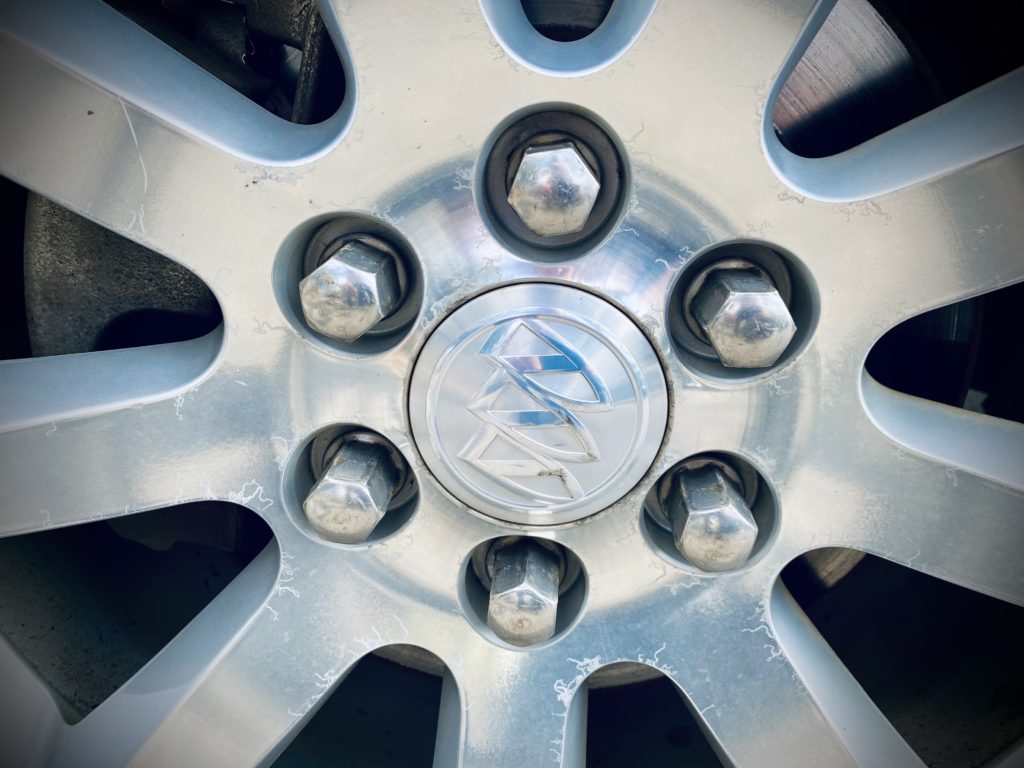
    Image of Chevrolet


    Why does GM approve of wheel refinishing?

    While wheel reconditioning is not approved of by GM, certain cosmetic repairs are fine.  It’s important that the wheels are carefully inspected first for any cracks, gouges, or bending. 

    GM says:

    “A refinisher’s responsibility includes inspecting for cracks using the Zyglo system or the equivalent. Any cracked wheels must not be refinished. No welding, hammering or reforming of any kind is allowed. The wheel ID must be recorded and follow the wheel throughout the process in order to assure that the same wheel is returned. Material removal, though, must be kept to a minimum. Re-machining of the wheel is not allowed. Paint and/or clear coat must not be present on the following surfaces: the nut chambers, the wheel mounting surfaces and the wheel pilot hole. The refinisher must permanently ID stamp the wheel and warrant the painted/clear-coated surfaces for a minimum of one year or the remainder of the new vehicle warranty, whichever is longer.”

    As you can see, GM provides very clear instructions for the procedures we must follow while inspecting and refinishing your Chevy’s wheels.  If the damage is something that can easily be sanded or painted, then refinishing is acceptable.  If the damage is more than superficial, then the wheels must be replaced.  

    Superficial cosmetic adjustments are allowed, since they won’t jeopardize the integrity of the wheel structure.  Minor sanding and polishing repairs do not involve the use of heat or reshaping that reconditioning would entail.  


    Image of Chevrolet


    Not all shops follow these recommendations, but we do.

    It’s disappointing, but some shops throw caution out the window and continue to practice wheel reconditioning, despite GM’s adamant recommendation to avoid this practice at all costs.  They can get away with this because no body shop is actually forced to adhere to a manufacturer’s Position Statement.  

    At our shop, we strongly believe that there’s no reason to take a chance with your Chevy’s repair by going against the advice of the manufacturer.  Reconditioned wheels can lead to very dangerous problems down the road.  We will always replace your Chevrolet’s wheels entirely if they’ve sustained significant damage or we will follow proper refinishing methods if the damage is cosmetic.  You won’t have to worry about driving on unstable wheels when you bring your vehicle to us.  We always follow the manufacturer’s recommendations in order to deliver the safest possible repair to our customers.